Table of Contents
The part of a shower that decides whether it lasts is the part you never see. Behind the tile sits the waterproofing, and when it fails, water finds the framing, the subfloor, and eventually your repair budget. For Orange County homeowners planning a bathroom remodel, the choice often comes down to Schluter vs traditional waterproofing. Both can protect your home for decades. The difference is in how they get there, and what that means for your timeline and your peace of mind.
Not Sure Which System You Need?
- Licensed & insured
- Quality Workmanship
- Transparent Pricing
What Traditional Waterproofing Means
Traditional waterproofing is often called a water in, water out system. The thinking is that some moisture will pass through tile and grout, so a rubber or PVC liner under a mortar bed catches it and routes it to weep holes at the drain. It has protected showers for generations and still works well when it is built with care.
The trade-off is time and coordination. A mortar bed has to cure before the next stage, and several trades touch the shower at different points. The leaks we get called to fix often trace back to a liner that was perfect on day one and then nicked while another trade worked nearby, with the damage staying hidden under the tile until a stain appears on the ceiling below.
How the Schluter System Works
The Schluter system, usually built around the KERDI membrane, takes the opposite approach. Instead of letting water in and draining it out, it stops moisture right at the surface. A bonded sheet membrane sits directly behind the tile, paired with a pre-sloped foam tray and a KERDI drain with a bonding flange. Together they form one continuous, watertight layer.
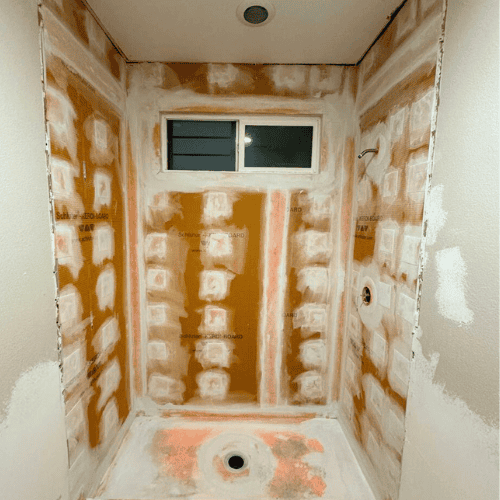
Because the tray arrives pre-sloped, there is no second mortar bed to float and no long cure to wait on. The part we value is that the membrane sits on the surface instead of buried under mortar, so we can see and check the full waterproof layer before a single tile goes up.
Where the Two Differ on a Real Job
On an actual build, a few differences stand out. Schluter installs faster because you skip mortar cure time, and the foam components weigh far less than a mud bed, which matters in two-story homes. The bonded system is also less dependent on any single installer’s hand, so good performance is easier to repeat.
Traditional systems can cost less in raw materials, and in skilled hands they perform beautifully. When we weigh Schluter vs traditional waterproofing on a project, we look at the layout, the floor structure, and the drain position before recommending one. The catch with Schluter is precision. A wrinkle, gap, or missed seam in the membrane can undo the seal, so the install has to be clean.
Which One Is Right for Your Bathroom
Here is the honest answer: both systems pass code, and both keep water where it belongs when they are installed correctly. The better question is which one fits your project.
Schluter tends to win for curbless, zero-threshold showers, multi-story homes, and anyone who wants a faster, more predictable build. A traditional mortar bed still earns its place on custom floor shapes and with crews who have poured them for years. In many older Orange County homes, the existing framing and drain position guide the call more than brand preference does. Think past the upfront price too, because a leak found two years later costs far more than the gap between the two systems on day one.
Waterproofing Done Right
We have rebuilt enough water-damaged bathrooms to know the system matters less than the care taken behind the wall. Schluter or traditional mortar bed, the goal is the same: a clean, continuous waterproof layer that keeps your Orange County home dry for the long haul.
Get the Waterproofing Right
- Licensed & insured
- Quality Workmanship
- Transparent Pricing